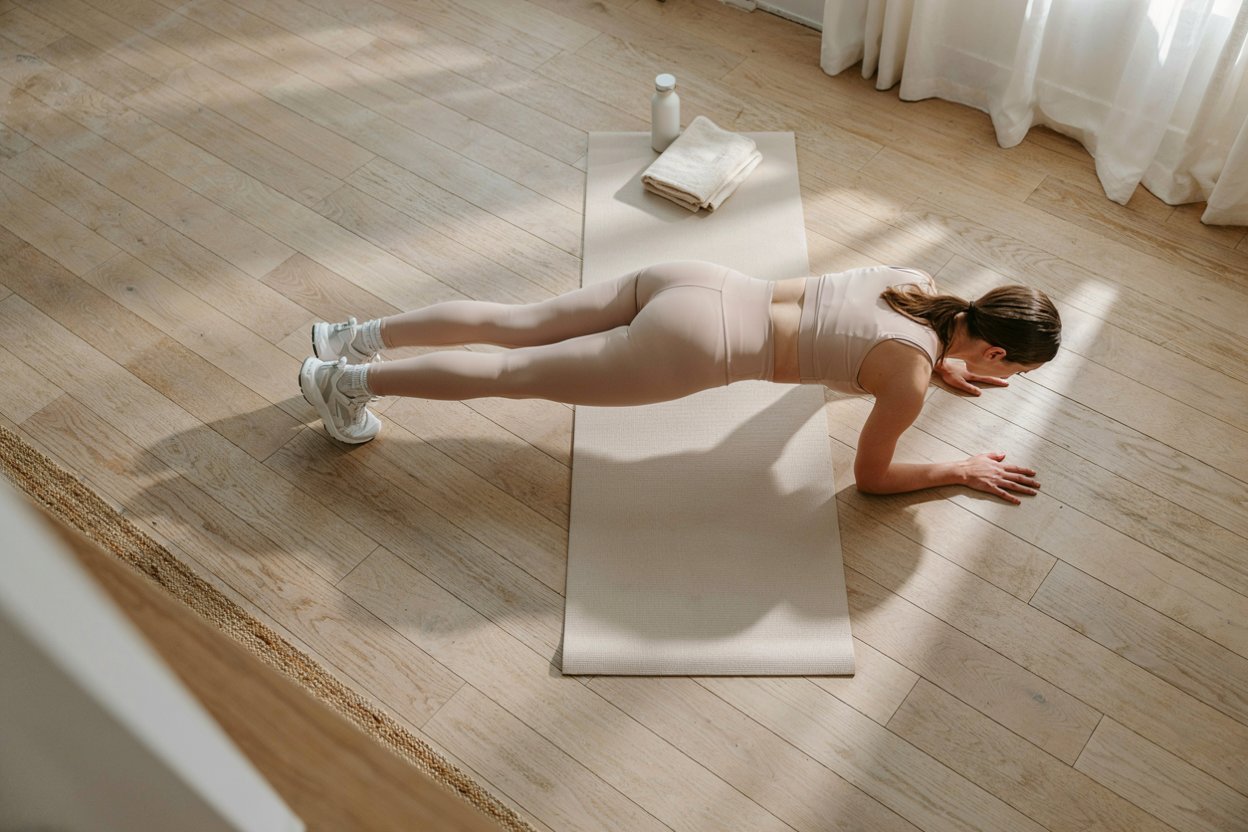
If you spend hours a day hunched over a laptop or looking down at your phone, your body has probably adapted in ways you did not choose.
Rounded shoulders and a forward head are two of the most common posture problems I see, especially among people who work at a desk, drive frequently, or spend a lot of time on their phone.
They tend to creep up slowly, which is part of why so many people do not notice them until a photo, a mirror, or a nagging ache in the neck and shoulders forces them to pay attention.
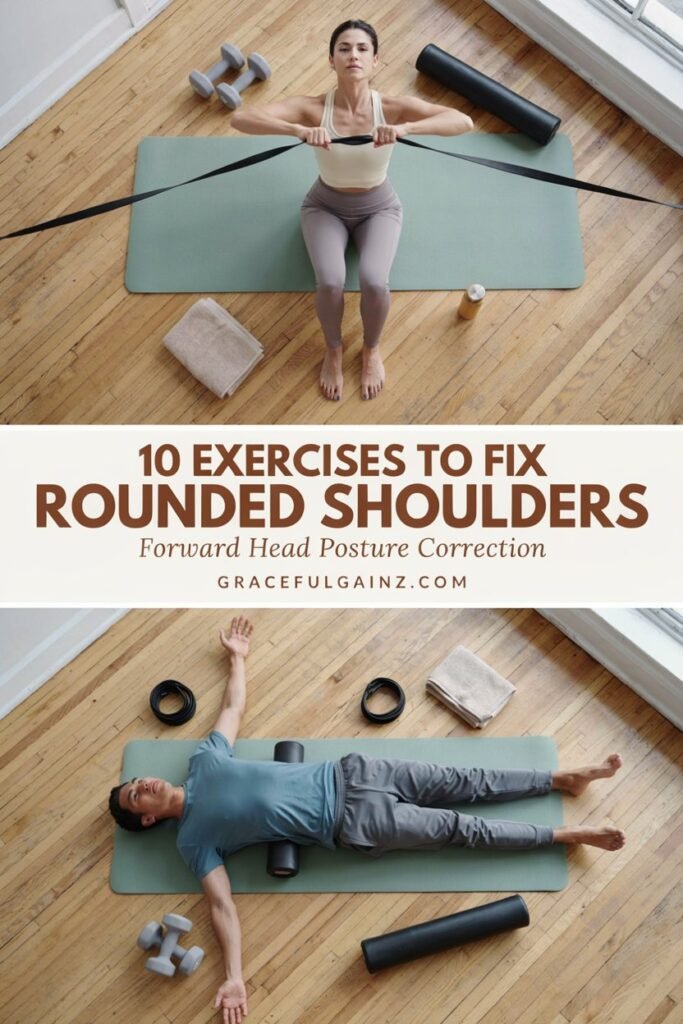
The good news is that both of these patterns are highly fixable, and you do not need a gym membership, expensive equipment, or hours of free time to do it.
In this guide I am sharing the exact ten exercises I use to correct rounded shoulders and forward head posture, along with the reasoning behind why they work, the small lifestyle changes that made the biggest difference for me, expert informed tips to speed up your progress, a simple equipment shopping list, and answers to the questions I get asked most often.
By the end of this post you will have a complete, repeatable routine you can start today, whether you have ten minutes or an hour to give it.
Why I Started Paying Attention to My Posture

A couple of years ago I caught a glimpse of myself in a store window and barely recognized the way I was standing.
My shoulders were rolled forward, my head was jutting out ahead of my body, and I looked tired even though I felt fine. That moment is what pushed me to actually research what was happening to my body and figure out how to reverse it.
If you are reading this, there is a good chance you spend a lot of your day sitting at a desk, looking down at your phone, or driving. I did all three, and over time my body adapted to those positions.
That adaptation is exactly what causes rounded shoulders and forward head posture, and I want to walk you through everything I learned so you can understand it and actually fix it, not just stretch for five minutes and hope for the best.
What Rounded Shoulders and Forward Head Posture Actually Are
The technical name for this pattern is upper crossed syndrome. I know that sounds intimidating, but the concept is simple once you understand it.
Certain muscles in your body get tight and short from being in a shortened position too often. Other muscles get weak and overstretched from being pulled out of their natural position for the same reason.
In your chest and the front of your neck, the muscles tend to get tight. In your upper back and the deep muscles that stabilize your neck, the muscles tend to get weak.
When that imbalance builds up over months or years, your shoulders round forward and your head shifts ahead of your spine instead of sitting directly on top of it the way it should.
I found this fascinating once I understood it because it explained why stretching alone never worked for me. I needed to stretch the tight muscles and strengthen the weak ones at the same time. That is exactly what the exercises below are designed to do.
Why This Matters Beyond Just Looking Better
I will be honest, the first reason I wanted to fix my posture was purely how I looked in photos. But the more I learned, the more I realized this goes much deeper than appearance.
Forward head posture puts a significant amount of extra strain on your neck and upper back. For every inch your head moves forward of your shoulders, the effective weight your neck has to support increases dramatically.
That is a big part of why so many people who sit at a desk all day deal with chronic neck and shoulder tension, tension headaches, and even jaw pain.
Rounded shoulders also compress your chest cavity, which can make it harder to take a full, deep breath. I genuinely noticed a difference in how I breathed once I started correcting my posture. I felt like I had more room in my chest and I was not as short of breath during workouts.
There is also a confidence piece to this that I did not expect. When I stand taller and my shoulders are back, I feel different. I carry myself differently. That might sound small, but I think it matters.
How I Approach This Routine
I want to be upfront with you about something important. Posture change takes time and it takes consistency. I did not wake up one day with perfect posture.
I gave myself about six weeks of doing these exercises three to four times a week before I noticed a real, lasting difference. Some days I only had five minutes and that was still better than skipping it entirely.
I am also going to be honest that exercise alone will not completely undo eight hours of sitting with poor ergonomics. I had to change my desk setup too, and I will share what worked for me later in this post. But the exercises are the foundation, so let me walk you through each one.
The 10 Exercises I Use
1. Chin Tucks
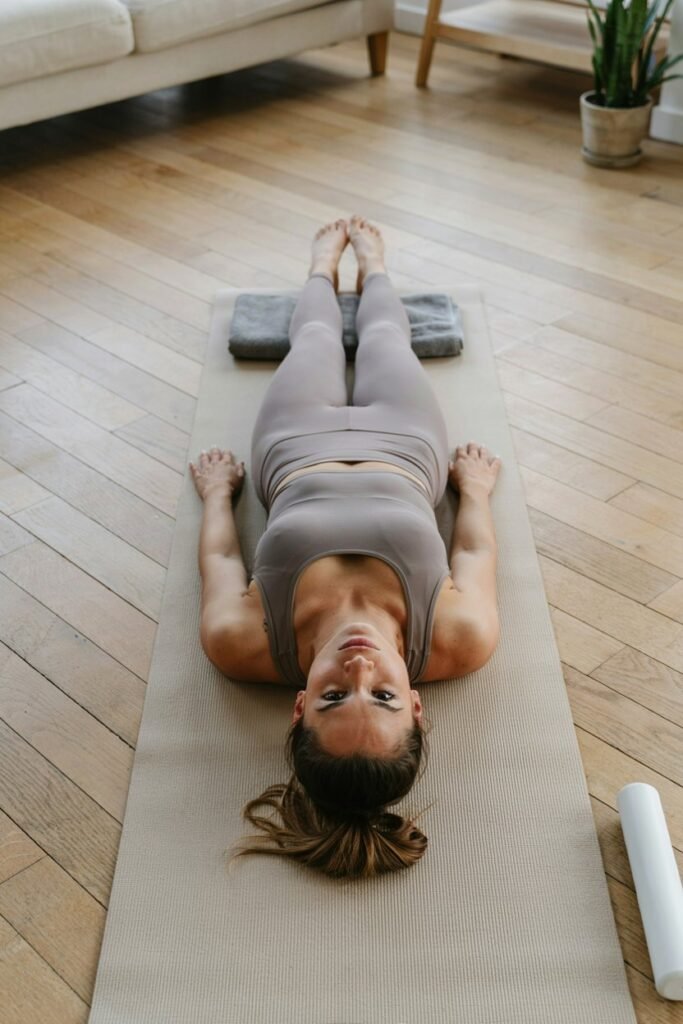
This is the exercise I do the most often because I can literally do it anywhere, including sitting at my desk.
Sit or stand tall and, without tilting your head up or down, gently draw your chin straight back like you are trying to make a double chin.
You should feel a stretch at the base of your skull and some activation in the front of your neck. Hold that position for three to five seconds and then release.
Sets and reps: 3 sets of 10 to 15 reps
This exercise retrains your neck to stack properly over your spine instead of jutting forward, and it is often the first exercise physical therapists recommend for forward head posture because it directly targets the deep neck flexors that get weak from looking down at screens all day.
2. Wall Angels
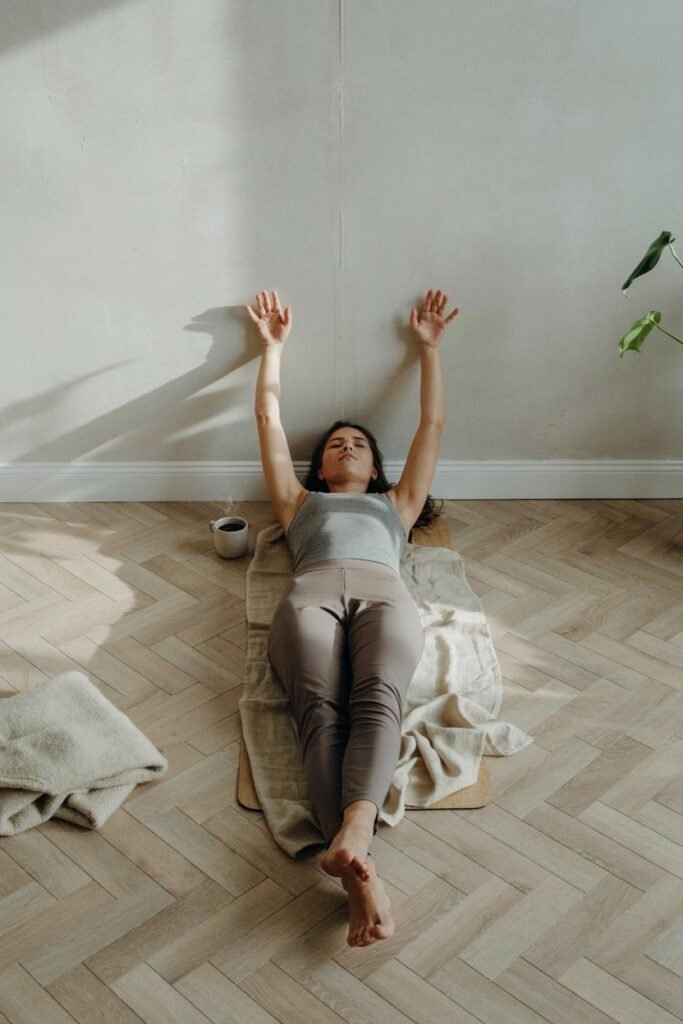
I remember the first time I tried this exercise and realized just how tight my shoulders had become.
Stand with your back flat against a wall, feet a few inches away from it, and bring your arms up into a goalpost shape with your elbows bent at ninety degrees. The backs of your hands should touch the wall.
Slowly slide your arms up toward the ceiling and back down, keeping your lower back, arms, and hands in contact with the wall the entire time.
If you cannot keep everything touching the wall at first, that is completely normal and it tells you exactly how much mobility work you need. I could barely get my arms above my shoulders when I started.
Sets and reps: 3 sets of 10 reps
I promise this gets easier surprisingly fast.
3. Band Pull Aparts
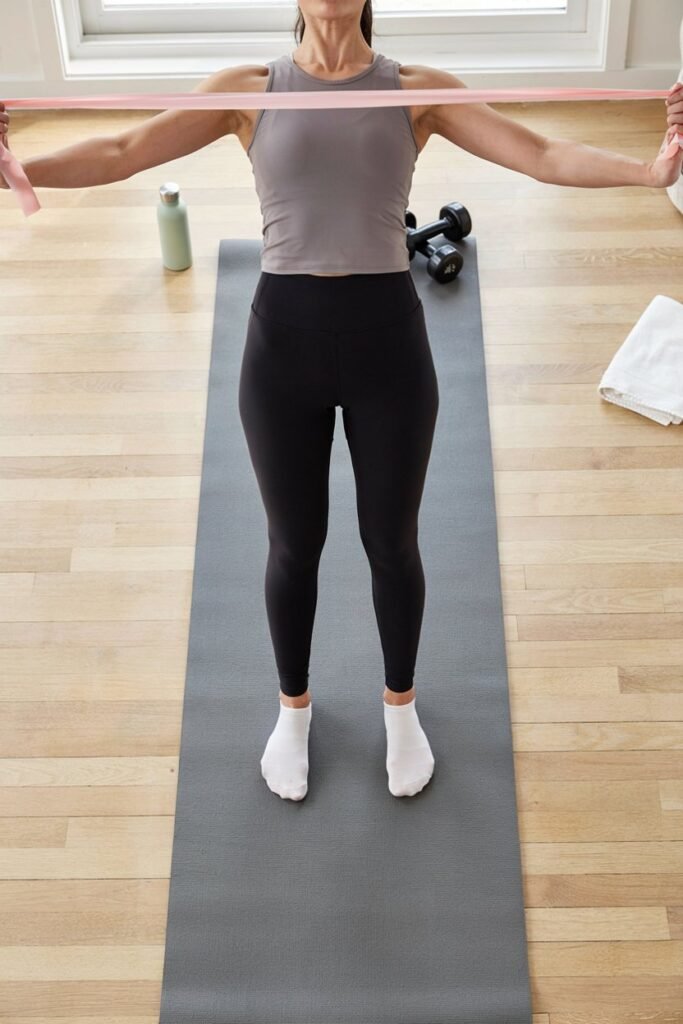
I keep a resistance band by my desk specifically for this exercise because I can do it in under a minute between tasks. Hold a light resistance band in front of you with straight arms and a shoulder width grip.
Pull the band apart until it touches your chest, focusing on squeezing your shoulder blades together rather than just moving your arms. Control the band back to the starting position instead of letting it snap back.
Sets and reps: 3 sets of 15 reps
This one directly strengthens the muscles between your shoulder blades that get weak and overstretched when your shoulders round forward.
4. Doorway Chest Stretch
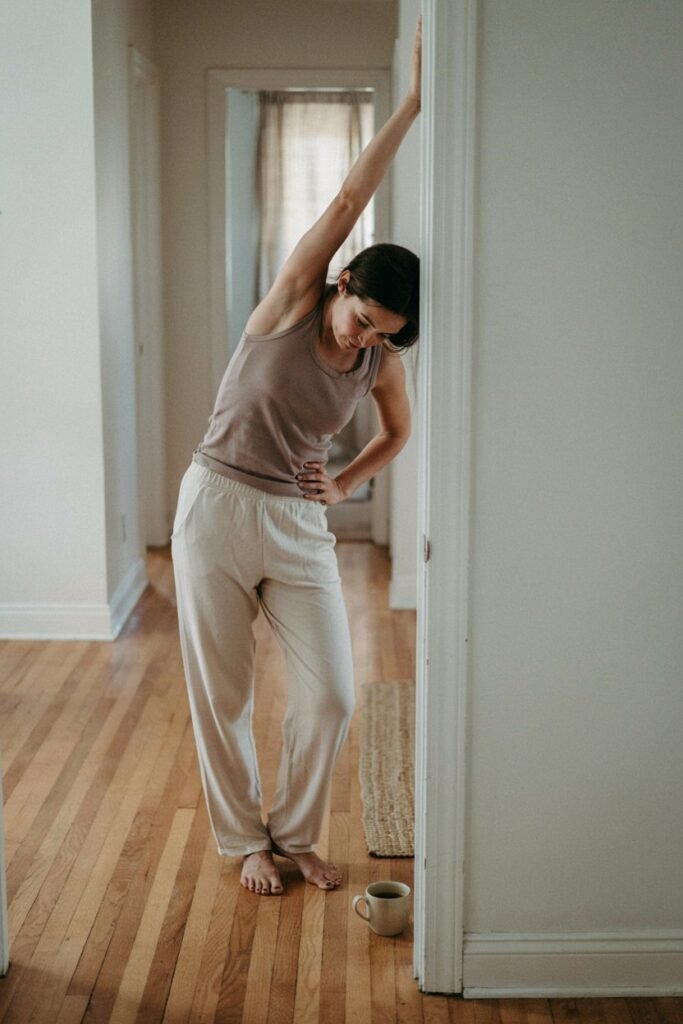
This is one of the simplest and most effective stretches I have found for tight chest muscles, and you probably have a doorway within reach right now.
Stand in a doorway and place your forearm on the frame with your elbow bent to ninety degrees. Step forward slowly until you feel a stretch across your chest and the front of your shoulder.
Hold time: 30 seconds per side, 2 to 3 rounds
I do this one almost every single day because my chest muscles are naturally tight from years of typing and driving, and this stretch directly counters that.
5. Prone Y T W Raises
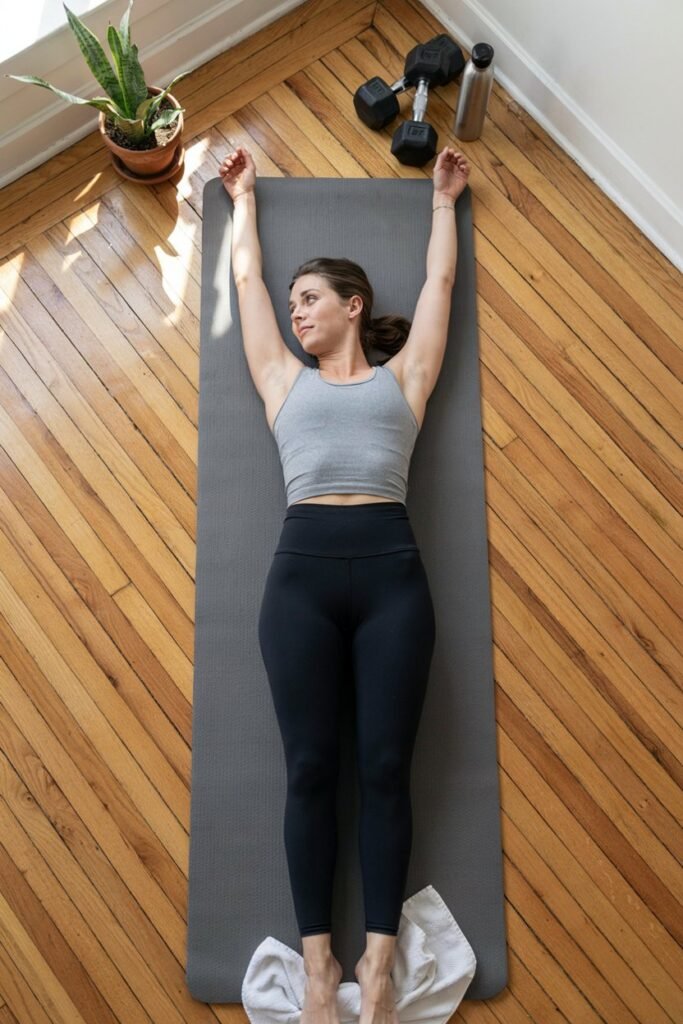
This exercise looks simple but I promise it will humble you the first time you try it, especially without any weight.
Lie face down on a mat or bench and raise your arms into a Y shape, then lower them and raise into a T shape, then lower and raise into a W shape, squeezing your upper back muscles each time.
I started with no weight at all because my upper back was so weak, and I want you to do the same if this is new to you. Once bodyweight feels manageable, you can add very light dumbbells.
Sets and reps: 2 sets of 8 reps per position (Y, T, and W)
6. Face Pulls
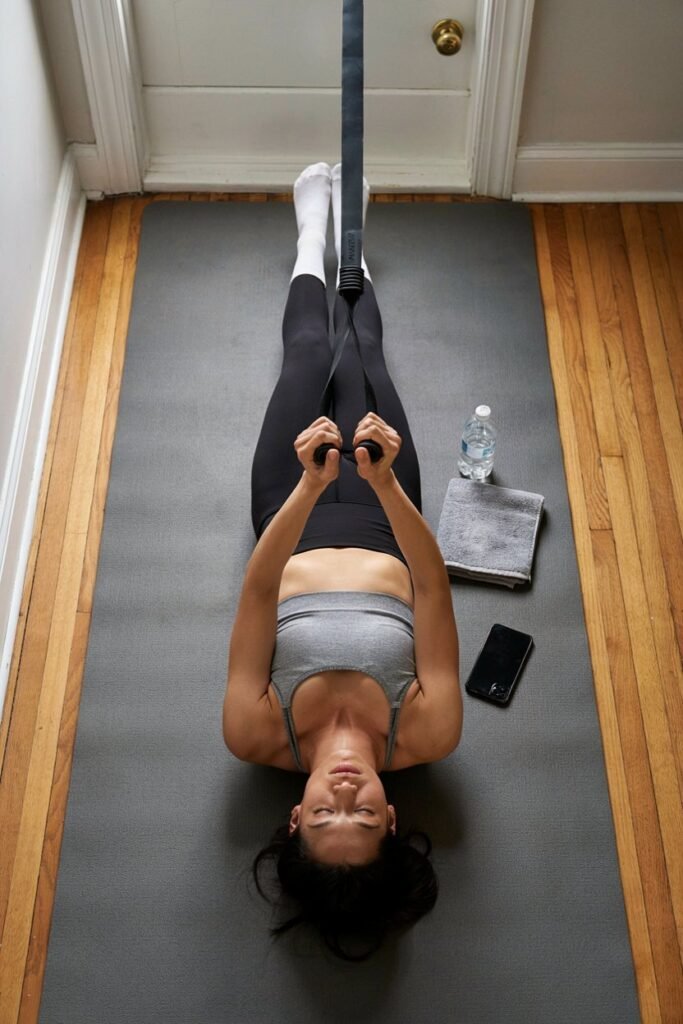
If I had to pick just one exercise from this entire list, I would pick this one.
Using a resistance band anchored at head height, or a cable machine if you have access to a gym, pull the band toward your face with your elbows high, squeezing your shoulder blades together hard at the end of the movement.
Sets and reps: 3 sets of 12 to 15 reps
I genuinely believe this single exercise did more for my rounded shoulders than anything else on this list. It targets the rear deltoids and the muscles between your shoulder blades in a way that very few other exercises do as effectively.
7. Cat Cow Stretch
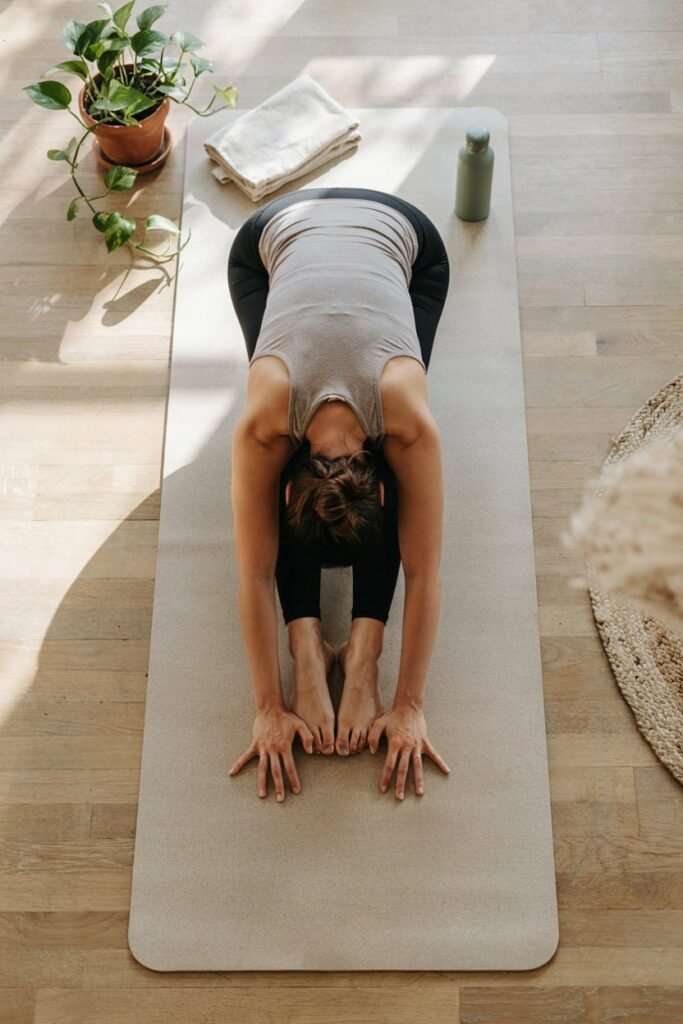
I use this one to loosen up my entire upper spine, which tends to get stiff and stuck in a rounded position from sitting so much.
Get on your hands and knees and alternate between arching your back up toward the ceiling like a cat and then dropping your belly down while lifting your chest and gaze up like a cow.
Sets and reps: 2 sets of 10 reps
I focus on feeling the movement happen through my upper back specifically rather than just my lower back.
8. Reverse Fly
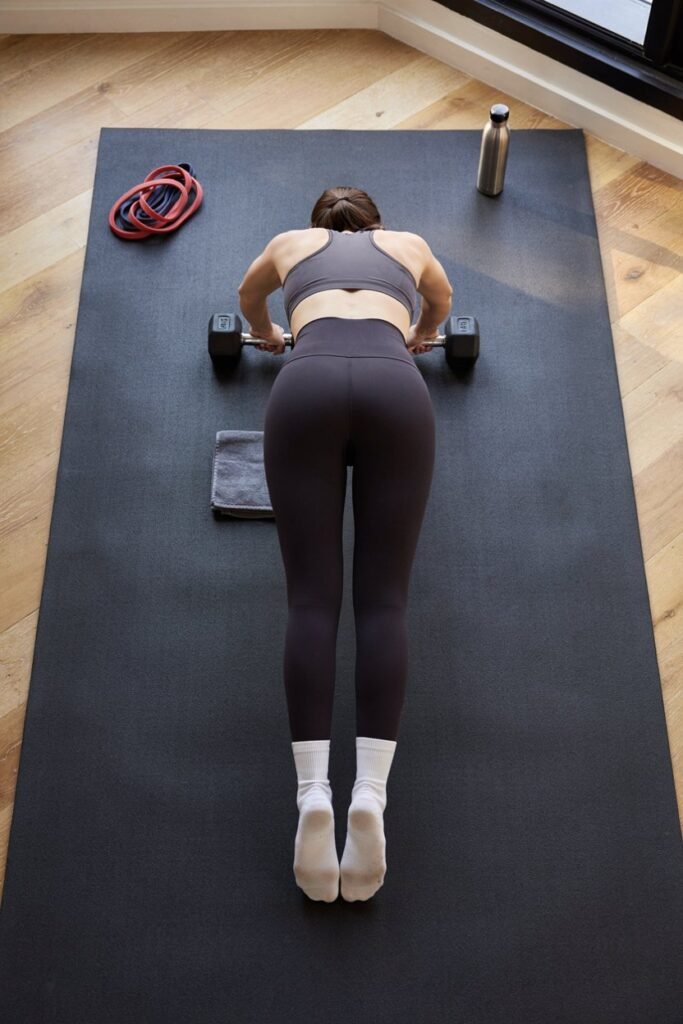
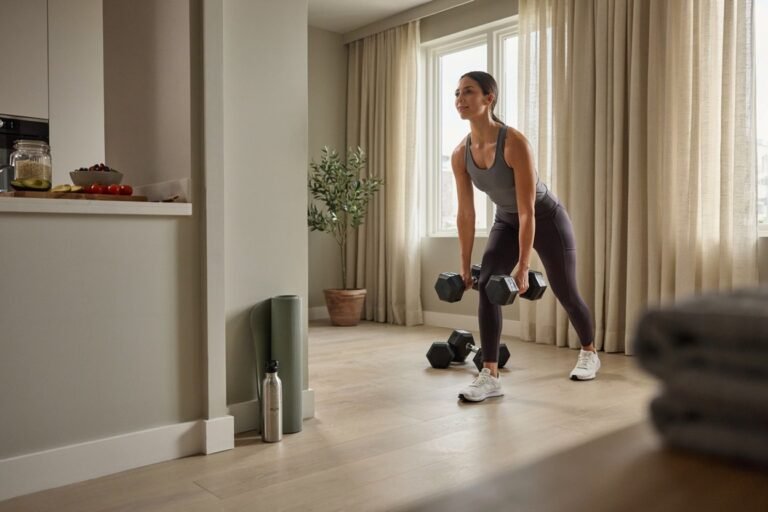
Hinge forward at your hips while holding a pair of light dumbbells, letting your arms hang straight down toward the floor.
Raise your arms out to the sides, squeezing your shoulder blades together at the top of the movement, keeping a slight bend in your elbows the entire time.
Sets and reps: 3 sets of 12 reps
This one strengthens the same muscle group as the face pulls and band pull aparts, but the different angle and the addition of weight makes it a great complement to the band exercises earlier in the list.
9. Thoracic Extension Over a Foam Roller
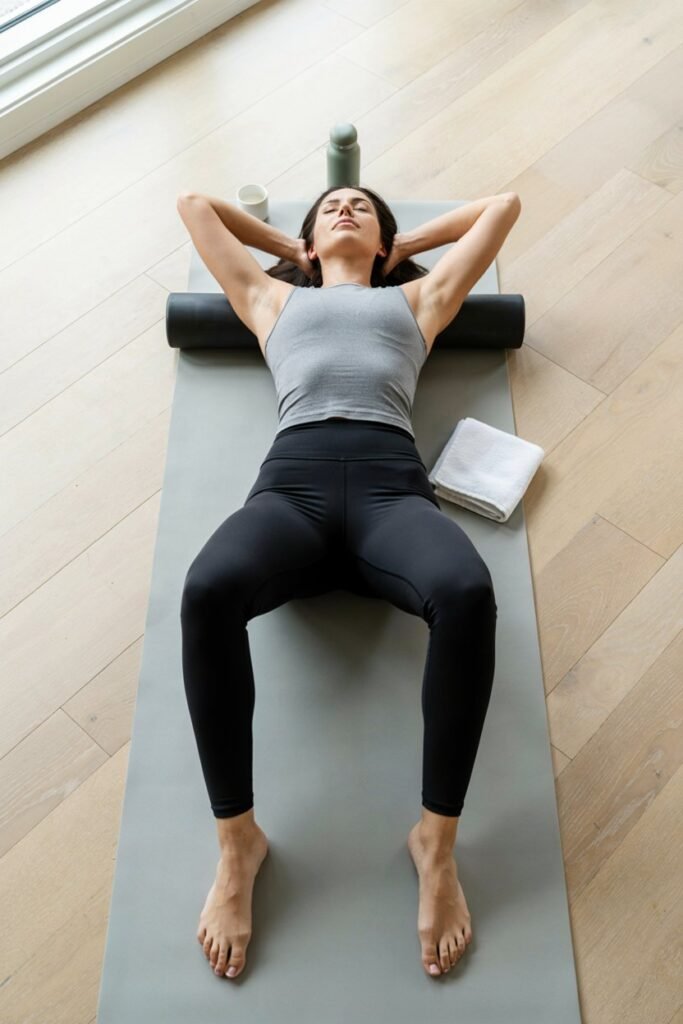
This exercise felt incredible the first time I tried it because I did not realize how stiff my upper back actually was.
Lie back over a foam roller placed horizontally under your upper back, supporting your head with your hands. Gently extend backward over the roller to open up your chest and upper spine.
I move very slowly here and never force the stretch.
Sets and reps: 2 sets of 8 to 10 reps, holding briefly at the deepest point each time
10. Prone Cobra
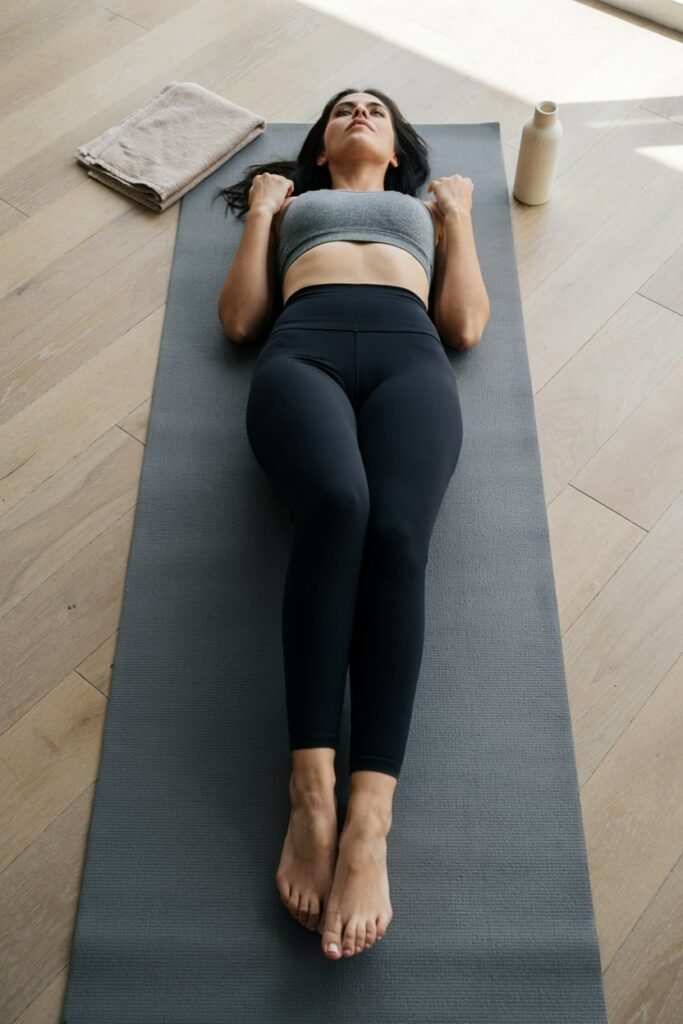
I saved this one for last because I think of it as the exercise that ties everything together. Lie face down with your arms at your sides and your palms facing down.
Lift your chest, arms, and legs slightly off the ground at the same time, squeezing your shoulder blades and your glutes as you hold the position.
Sets and reps: 2 sets of 10 to 12 reps, holding 2 seconds at the top
This builds the postural endurance you need to actually hold yourself upright throughout the day, not just during a workout.
What I Changed Beyond Exercise
I mentioned earlier that exercise alone was not enough for me, and I want to share what else made a real difference.
I raised my monitor so the top of the screen sits at eye level instead of looking down at it all day. I adjusted my chair so my elbows sit at roughly ninety degrees while typing.
I also started setting a timer every thirty to forty five minutes as a reminder to stand up, do a few chin tucks, and reset my posture before sitting back down.
None of these changes cost me anything and they made a bigger difference than I expected when combined with the exercises above.
How Long This Actually Takes
I want to set realistic expectations because I think a lot of posture content online overpromises.
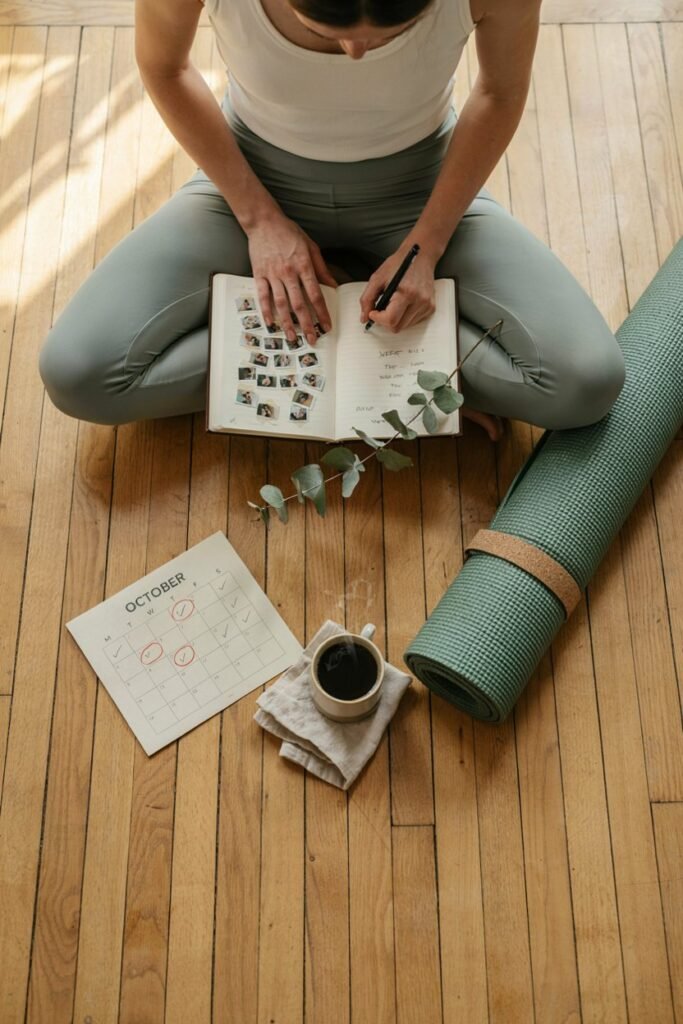
I noticed small improvements within the first two weeks, mostly in how my neck and shoulders felt at the end of the day. The visible change in how I stood took closer to six weeks of consistent effort.
I took a photo of myself from the side when I started so I had something to compare against later, and I would genuinely recommend you do the same. Posture change happens gradually and it is easy to miss the progress day to day if you do not have something to look back on.
Expert Tips to Get Better Results
These are the details I wish someone had told me when I started, since they made a noticeable difference in how quickly I saw progress.
I learned that consistency matters far more than intensity. Doing five minutes of this routine every single day beats one long session once a week, because postural muscles respond to frequent, repeated signals rather than occasional maximal effort.
I also learned to prioritize the strengthening exercises over the stretches when I was short on time.
Stretching tight muscles feels good, but if the weak muscles never get strong enough to hold your shoulders back, the tight muscles will pull you right back into the same position within a day or two.
Breathing properly during the exercises made a real difference too. I used to hold my breath during the harder movements like face pulls and prone cobra, which increased tension in my neck and upper traps, the exact muscles I was trying to relax.
Exhaling during the effort portion of each rep helped me stay relaxed through my neck and shoulders.
Finally, I found that pairing this routine with a short walk outside helped more than I expected. Walking with your arms swinging naturally encourages your shoulders to sit back in a way that sitting never will.
Simple Equipment Shopping List
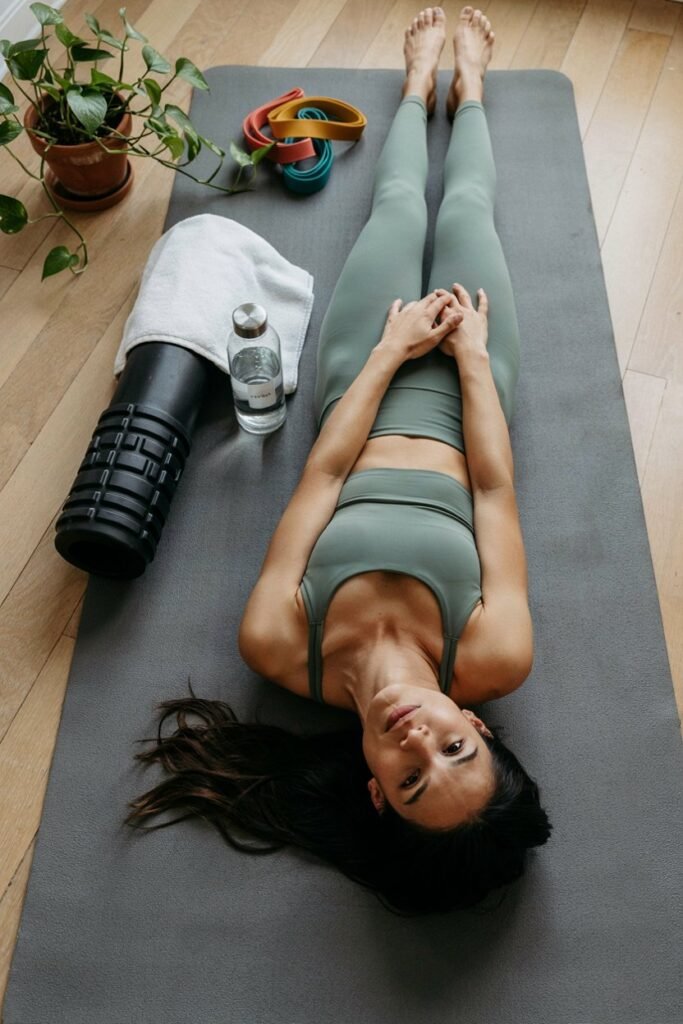
You do not need much to do this routine, which is part of why I like it. Here is what I personally use.
- Resistance band (light to medium, flat looped style) for band pull aparts and face pulls
- Doorway anchor (optional) to attach a band at head height for face pulls if you do not have a cable machine
- Light dumbbells (I use 2 and 5 pounds) for the Y T W raises and reverse fly once bodyweight becomes easy
- Foam roller for the thoracic extension exercise
- Yoga mat for the floor based exercises like cat cow and prone cobra
None of this needs to be expensive. I started with a five dollar resistance band and a towel rolled up in place of a foam roller, and it worked just fine while I figured out whether this routine was something I would stick with.
Frequently Asked Questions
How long does it take to fix rounded shoulders and forward head posture?
In my experience, you can expect to feel a difference in tension and comfort within the first two weeks of consistent practice.
Visible changes in how you stand typically take around six weeks of doing this routine three to four times per week, though this varies depending on how long the postural habit has been in place.
Can these exercises be done every day?
Yes. Most of these exercises, especially chin tucks, band pull aparts, and the doorway chest stretch, are safe to do daily. I do a shortened version of this routine most days and save the full version for three to four dedicated sessions per week.
Do I need a gym membership to do this routine?
No. Every exercise in this guide can be done at home with minimal equipment. I have done this entire routine in a hotel room with nothing but a resistance band.
Will this help with tension headaches?
Many people who correct forward head posture report fewer tension headaches, since the extra strain on the neck muscles is a common headache trigger. I noticed this myself once my head stopped jutting forward throughout the day.
Is it too late to fix my posture if I have had this for years?
No. Posture is a learned pattern, not a permanent structural change, and the body continues to respond to consistent training at any age. It may take longer if the pattern has been in place for many years, but improvement is still very achievable.
Should I stretch or strengthen first in each session?
I generally do a couple of the stretches first, like the doorway chest stretch and cat cow, to loosen tight muscles, then move into the strengthening exercises like band pull aparts and face pulls while those muscles are warmed up.
Final Thoughts
Fixing my posture was not a quick fix and it was not glamorous. It was ten exercises done consistently, a few changes to my desk setup, and a willingness to check in on my progress instead of expecting overnight results.
If you commit to this routine and give it the six weeks I mentioned earlier, I genuinely believe you will notice the same kind of difference I did, both in how you look and in how your neck and shoulders feel by the end of a long day.
If you try this routine, I would love to hear how it goes for you. Save this post so you always have it on hand, and share it with anyone else you know who spends their day hunched over a screen the way I used to.