If you’ve ever felt stiff through your hips after sitting all day, struggled to lift your knees comfortably during a workout, or felt like your stride could use more power, your hip flexors may deserve a little more attention.
I used to think hip flexor exercises were mainly something runners and athletes needed to worry about. But after incorporating a few simple movements into my own routine, I realized how much these muscles contribute to everyday movement too.
Your hip flexors help bring your thigh toward your torso and play an important role in movements such as walking, running, climbing stairs, and lifting your knees.
The good news is that you don’t need a gym full of equipment to work them.
A few controlled exercises, performed consistently, can help you build strength and improve how your hips move.
In this guide, I’m sharing 7 beginner-friendly hip flexor exercises you can do at home, along with form cues, ways to make them easier or harder, and tips for getting more from your workouts.
A quick note: These exercises are intended for general fitness. If an exercise causes pain, stop rather than pushing through it.
Why Strengthen Your Hip Flexors?
Your hip flexors are a group of muscles at the front of your hips that help move your legs and stabilize your pelvis.
They work whenever you lift your knee, walk, run, climb stairs, or change direction.
Strong hip flexors can be especially useful for people who participate in activities that require repeated knee lifting or quick changes in direction.
But there’s another reason I like including them in a balanced workout: they’re easy to overlook.
It’s common to focus heavily on larger muscle groups such as the glutes, quads, and hamstrings while giving the muscles responsible for hip flexion very little direct attention.
Adding a few simple movements to your routine can help create a more balanced approach to lower-body strength.
1. Standing Knee Drive
This is one of the easiest exercises to add to your routine because you don’t need any equipment.
I like starting here because you can focus on controlling the movement rather than worrying about complicated positioning.
How to Do It
- Stand upright with your feet about hip-width apart.
- Keep your chest lifted and your core gently engaged.
- Slowly lift your right knee toward your chest.
- Pause briefly at the top of the movement.
- Lower your foot with control.
- Repeat on the opposite side.
Aim for 8 to 12 repetitions per side.
Make It Easier
Hold onto a wall or sturdy chair for balance.
Make It Harder
Add a resistance band around your feet or ankles once you can perform the movement comfortably with good control.
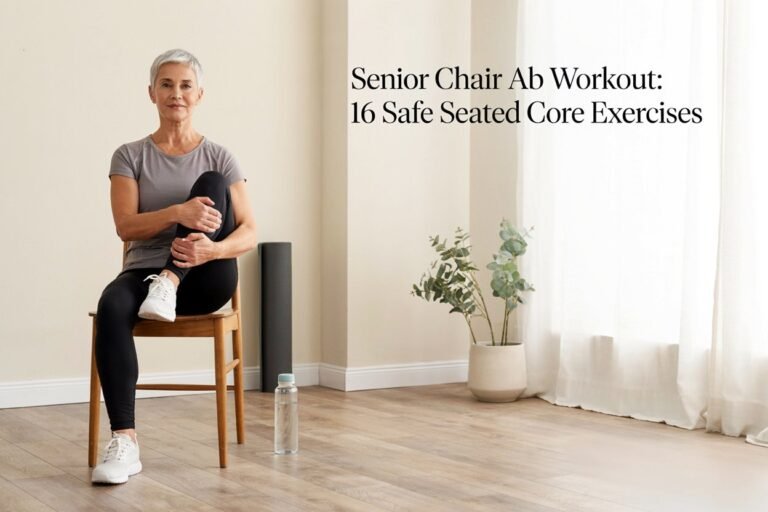
2. Seated Knee Lift
The seated version is a great choice if you’re new to direct hip flexor work.
Because you’re sitting down, there’s less balance involved, allowing you to concentrate on the movement itself.
How to Do It
- Sit near the front of a sturdy chair with both feet flat on the floor.
- Sit tall rather than leaning backward.
- Keeping your knee bent, lift your right foot from the floor.
- Raise the knee as high as you can comfortably control.
- Lower the foot slowly.
- Repeat with your left leg.
Perform 8 to 15 repetitions per side.
Try not to swing your leg or lean backward to create momentum.
The slower you perform this movement, the easier it is to notice whether you’re actually controlling the lift.
3. Lying Straight-Leg Raise
This exercise combines hip flexion with core control.
It’s a simple movement, but I find that doing fewer repetitions with better control is much more effective than rushing through a long set.
How to Do It
- Lie on your back with your legs extended.
- Keep your arms beside you or place your hands underneath your hips if that feels more comfortable.
- Brace your core gently.
- Slowly lift one straight leg upward.
- Pause briefly.
- Lower it back toward the floor with control.
- Repeat on the other side.
Start with 8 to 10 repetitions per leg.
Keep the movement controlled throughout.
If your lower back begins to arch excessively, reduce the range of motion.
4. Mountain Climbers
Mountain climbers add a more dynamic element to your workout.
They’re useful when you want to combine hip movement with core stability and cardiovascular work.
How to Do It
- Start in a high plank with your hands underneath your shoulders.
- Extend both legs behind you.
- Bring your right knee toward your chest.
- Return your right foot to the starting position.
- Bring your left knee forward.
- Continue alternating legs.
Start slowly rather than immediately trying to move as quickly as possible.
Once you can maintain good plank alignment, you can gradually increase the pace.
Try 20 to 30 seconds to begin.
5. Reverse Lunge With Knee Drive
This exercise combines a lower-body movement with a controlled knee lift.
It’s one of my favorites when I want a movement that feels more functional rather than isolating one small muscle.
How to Do It
- Stand tall with your feet hip-width apart.
- Step your right foot backward.
- Bend both knees and lower into a comfortable reverse lunge.
- Push through your front foot to return to standing.
- As you stand, bring your right knee forward and upward.
- Lower your foot and repeat.
- Switch sides.
Perform 6 to 10 repetitions per side.
Use a wall for balance if needed.
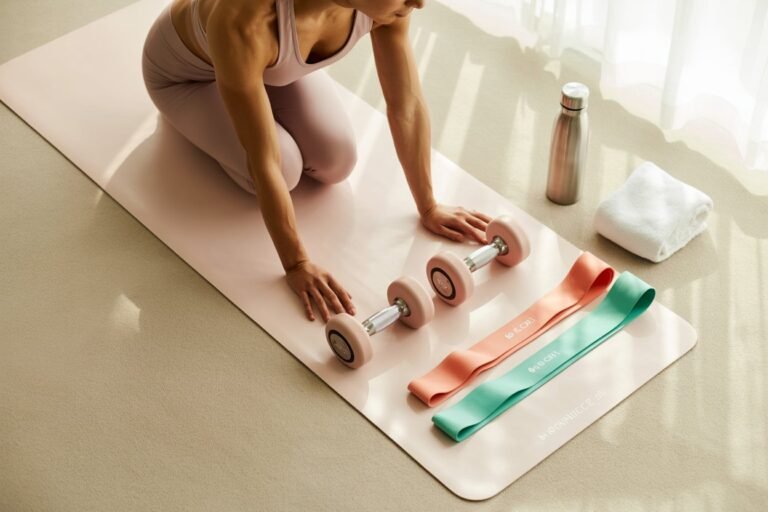
6. Resistance Band Hip Flexion
Once basic knee lifts become easy, adding resistance is a simple way to increase the challenge.
A light resistance band is enough to start.
How to Do It
- Secure the band according to the manufacturer’s instructions.
- Stand tall with the resistance positioned around your feet or ankles as appropriate for the band.
- Hold onto a stable surface if needed.
- Slowly lift one knee forward against the resistance.
- Pause briefly.
- Lower your leg under control.
- Complete your repetitions before switching sides.
Try 8 to 12 repetitions per side.
The goal isn’t to use the heaviest resistance possible. You should still be able to control both the lifting and lowering phases.
7. Dead Bug With Knee Movement
The dead bug is particularly useful because it challenges hip movement while asking you to maintain a stable trunk.
How to Do It
- Lie on your back.
- Bend your knees so your hips and knees are comfortably bent.
- Raise your arms toward the ceiling.
- Gently brace your core.
- Slowly lower one leg toward the floor.
- Bring it back to the starting position.
- Repeat on the opposite side.
Start with 6 to 10 controlled repetitions per side.
If your lower back begins lifting away from the floor, make the movement smaller.
How to Add These Exercises to Your Routine
You don’t need to perform all seven exercises every time.
When I’m putting together a lower-body session, I prefer choosing 2 or 3 movements and focusing on good technique rather than trying to squeeze everything into one workout.
For example:
Beginner routine
- Standing knee drives: 8–10 per side
- Seated knee lifts: 10 per side
- Dead bugs: 6–8 per side
More challenging routine
- Reverse lunge with knee drive: 8 per side
- Resistance band hip flexion: 10 per side
- Mountain climbers: 20–30 seconds
Rest as needed between exercises and adjust the repetitions according to your fitness level.
How to Get Better Results From Hip Flexor Exercises
The biggest mistake I see with exercises like these is rushing.
Hip flexor work doesn’t need to be fast to be effective.
Try to keep each repetition smooth and controlled. Pay attention to your posture, avoid swinging your legs, and focus on moving through a comfortable range.
It’s also worth remembering that strength doesn’t develop overnight.
Rather than trying to do more repetitions every session, focus first on performing the movement well. Once an exercise feels comfortable and controlled, you can gradually increase repetitions, resistance, or difficulty.
Common Mistakes to Avoid
Using Momentum
Swinging the leg upward can make an exercise feel easier, but you’re giving up control in the process.
Arching Your Lower Back
This is particularly common during lying leg raises. If you can’t maintain a comfortable position, reduce the range of motion.
Going Too Fast
Fast isn’t automatically better. Slow, controlled repetitions allow you to pay closer attention to your form.
Using Too Much Resistance
If you have to lean, twist, or swing your body to move the band, it’s probably too challenging.
Ignoring Discomfort
You may feel your muscles working, but sharp or persistent pain isn’t something you should simply push through.
How Often Should You Train Your Hip Flexors?
For general fitness, you can incorporate hip flexor strengthening into your lower-body workouts a couple of times per week, allowing adequate recovery between challenging sessions.
You don’t need a separate hip flexor workout every day.
Think of these exercises as one part of a balanced routine that also includes strengthening for your glutes, hamstrings, quads, calves, core, and upper body.
Final Thoughts
I used to overlook hip flexor work because it didn’t seem as important as the bigger lower-body exercises.
Now I see it differently.
Your hips are involved in so many everyday movements, and giving them some focused attention can be a useful addition to a well-rounded fitness routine.
Start with the easiest movements, focus on control, and gradually make things more challenging as your strength improves.
You don’t need a complicated workout or a room full of equipment. A few minutes, a little consistency, and good form can go a long way.
As always, listen to your body and choose exercises that feel appropriate for your current fitness level.