I used to wake up feeling stiff almost every morning.
My back felt tight.
My hips felt locked up.
And sometimes even getting out of bed felt uncomfortable.
At first, I thought I just needed to stretch more randomly during the day.
But what actually helped was creating a simple morning yoga flow focused on mobility.
Nothing intense.
Nothing complicated.
Just gentle movements that helped my body loosen up naturally.
And honestly, the difference was huge.
I started feeling:
- Less stiff in the mornings
- More flexible throughout the day
- And way more comfortable moving around
That’s exactly why I love this routine so much.
It’s beginner-friendly, calming, and easy to stick to.
Why Mobility Matters More Than You Think
A lot of people focus only on workouts or exercise.
But mobility is just as important.
Good mobility helps you:
- Move more comfortably
- Reduce stiffness
- Improve flexibility
- Feel less tight throughout the day
And the best part is, you don’t need an hour-long routine.
Even a short yoga flow in the morning can help a lot.
What You Need Before You Start
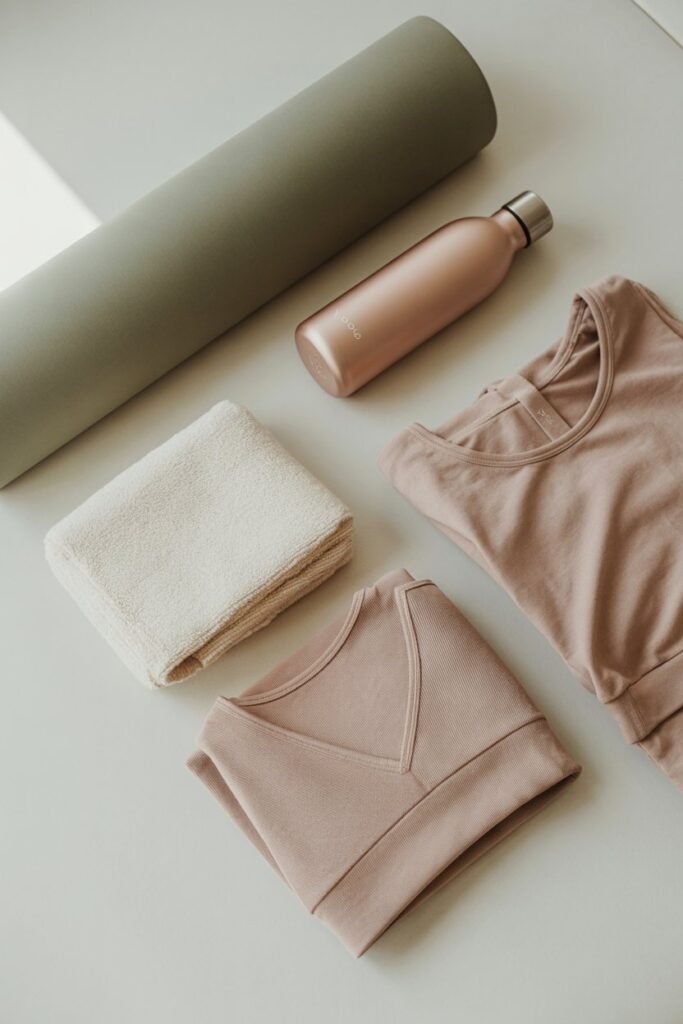
This routine is intentionally simple.
You don’t need fancy equipment or a perfect setup.
All you need is:
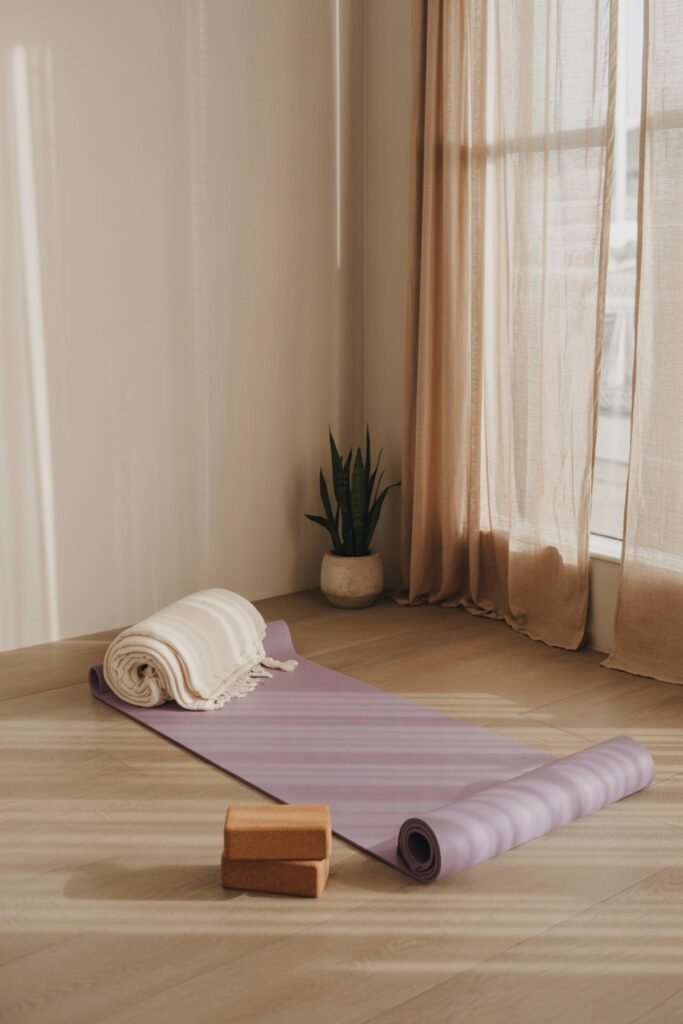
- A yoga mat or soft surface
- Comfortable clothes
- A little bit of space
- A few quiet minutes
That’s it.
No pressure to be perfect.
The goal is simply to move your body gently.
How This Morning Flow Works
This flow focuses on:
- Gentle stretching
- Joint mobility
- Slow controlled movement
- Relaxed breathing
The key is not rushing.
Move slowly and focus on how your body feels during each pose.
1. Cat-Cow Stretch
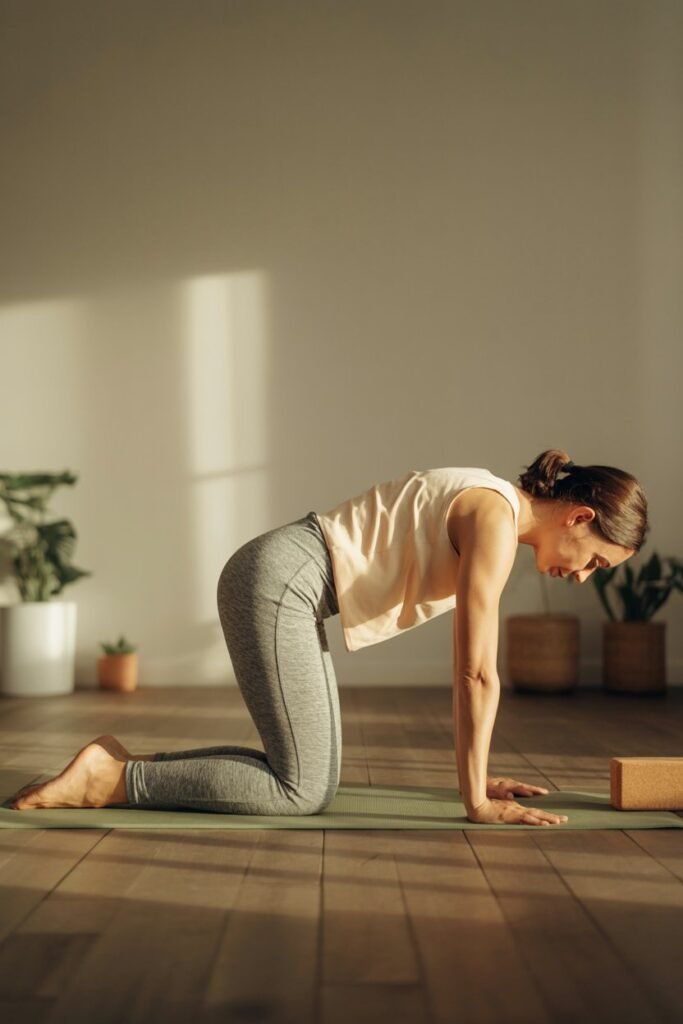
This is one of the best ways to wake up your spine and release stiffness.
Why It Helps
- Improves spinal mobility
- Loosens tight muscles
- Gently wakes up your body
How to Do It
Start on your hands and knees.
As you inhale, arch your back slightly and lift your chest.
As you exhale, round your spine and tuck your chin.
Move slowly and repeat several times.
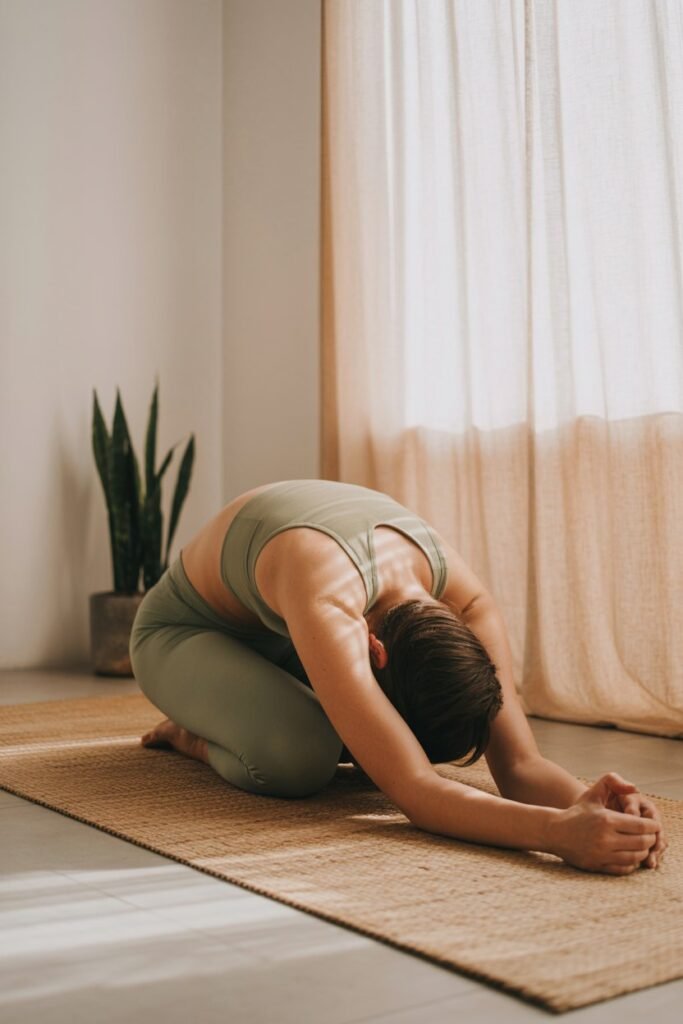
2. Child’s Pose
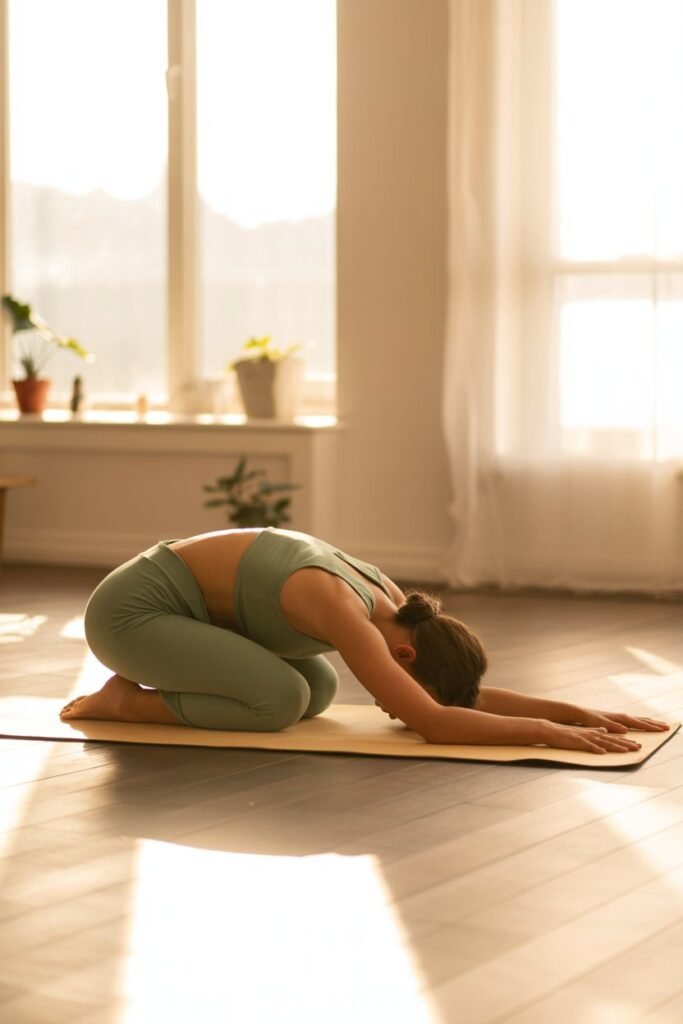
This pose instantly helps your body relax.
It’s gentle but really effective for releasing tension.
Why It Helps
- Stretches your back and shoulders
- Helps reduce tension
- Encourages deep breathing
How to Do It
Sit back onto your heels and stretch your arms forward on the floor.
Rest your forehead down and breathe slowly.
3. Downward Dog
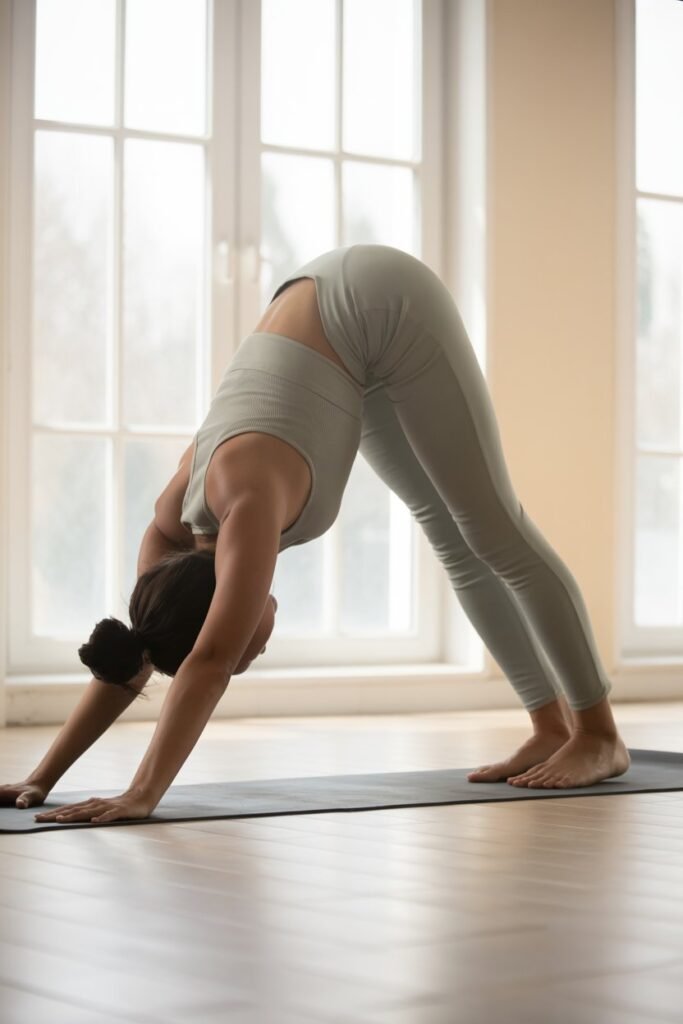
This pose stretches almost your entire body at once.
It can feel tight at first, and that’s completely normal.
Why It Helps
- Improves flexibility
- Stretches your legs and back
- Increases circulation
How to Do It
Lift your hips upward to create an upside-down V shape.
Keep your hands pressed firmly into the floor.
Bend your knees slightly if needed.
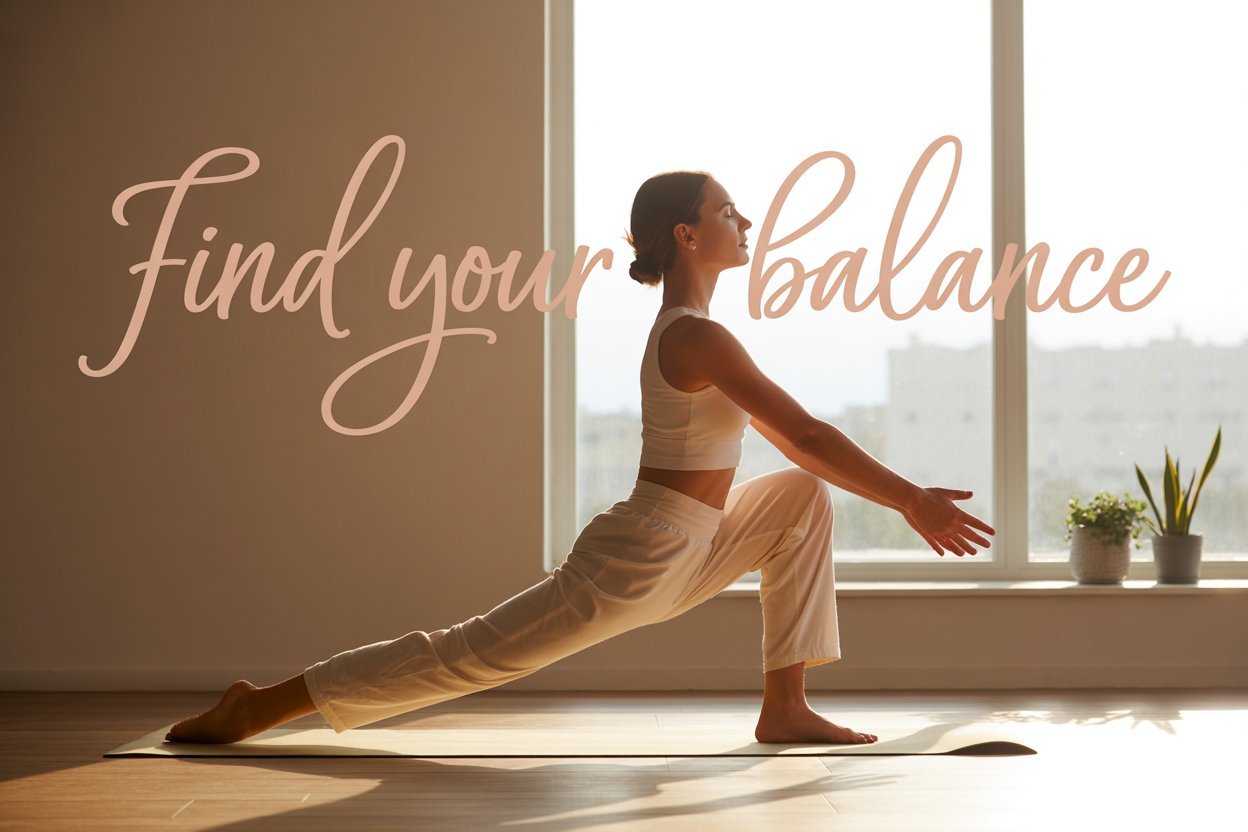
4. Low Lunge Stretch
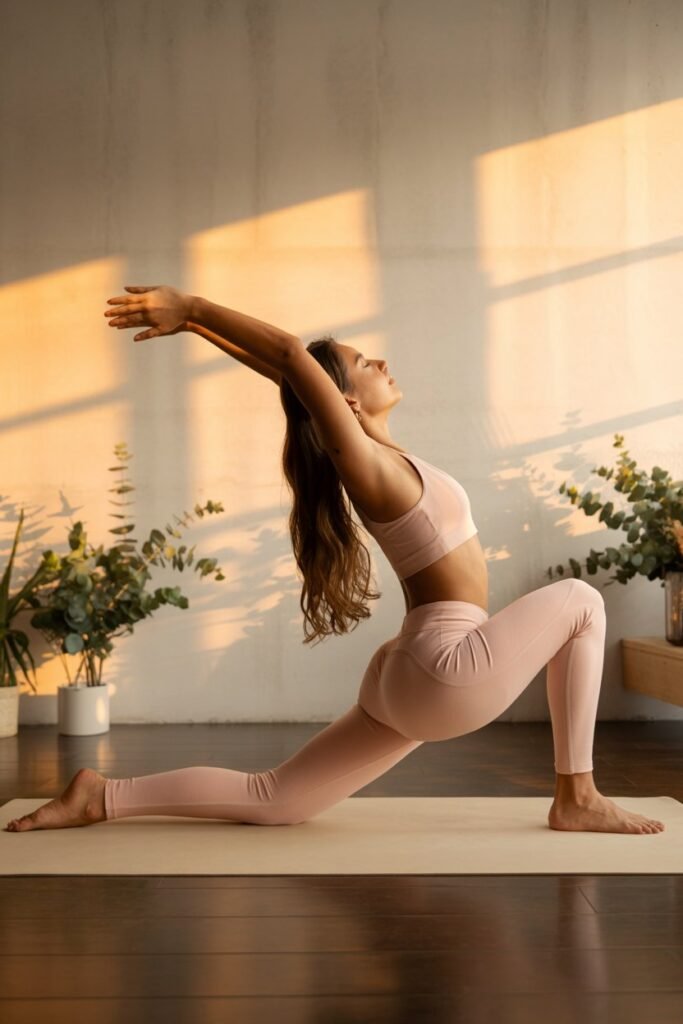
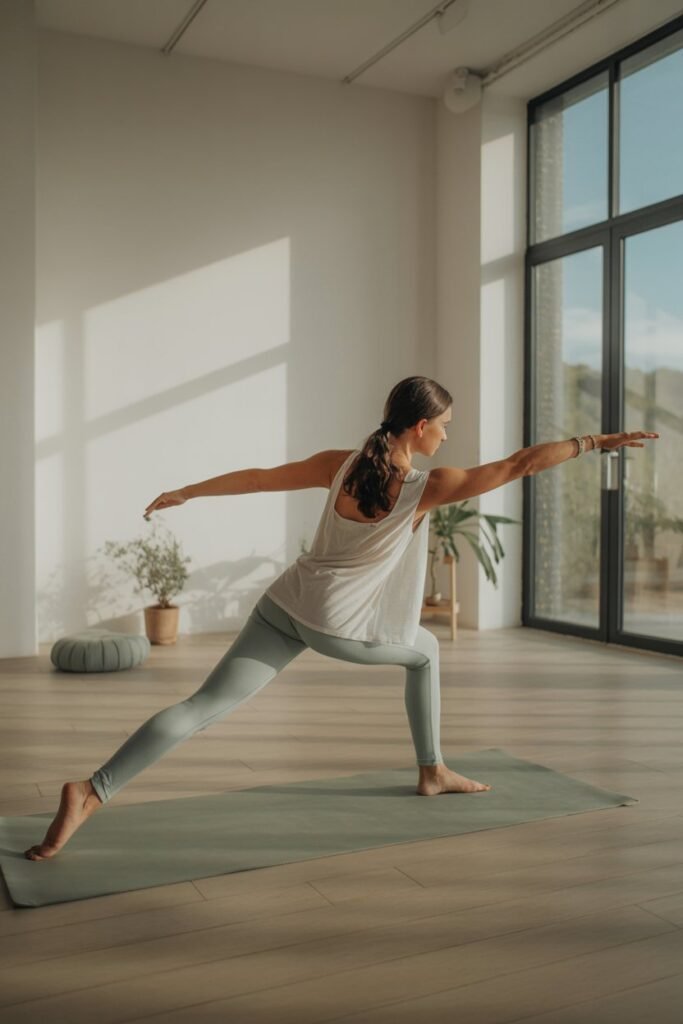
This is one of my favorite poses for tight hips.
Especially if you sit a lot during the day.
Why It Helps
- Opens up the hips
- Improves lower body mobility
- Reduces tightness
How to Do It
Step one foot forward while lowering the opposite knee to the floor.
Hold the stretch gently, then switch sides.
5. Seated Forward Fold
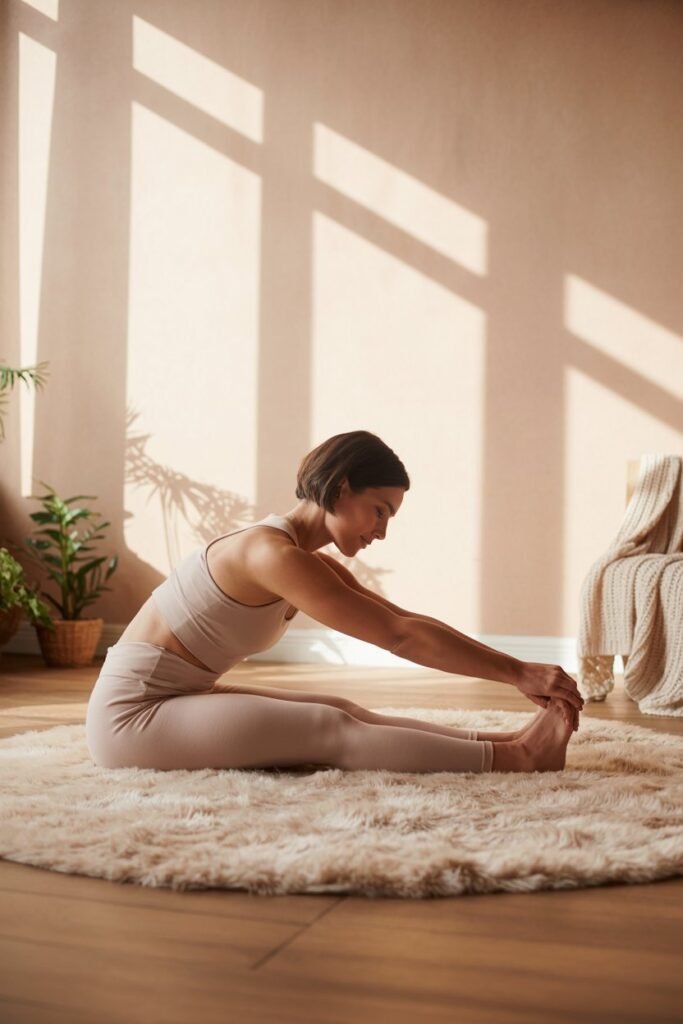
This is a slower stretch that helps release tension through your lower body.
Why It Helps
- Stretches hamstrings and back
- Improves flexibility
- Helps your body relax
How to Do It
Sit with your legs extended forward.
Slowly lean toward your feet without forcing the stretch.
Keep your breathing relaxed.
6. Cobra Pose
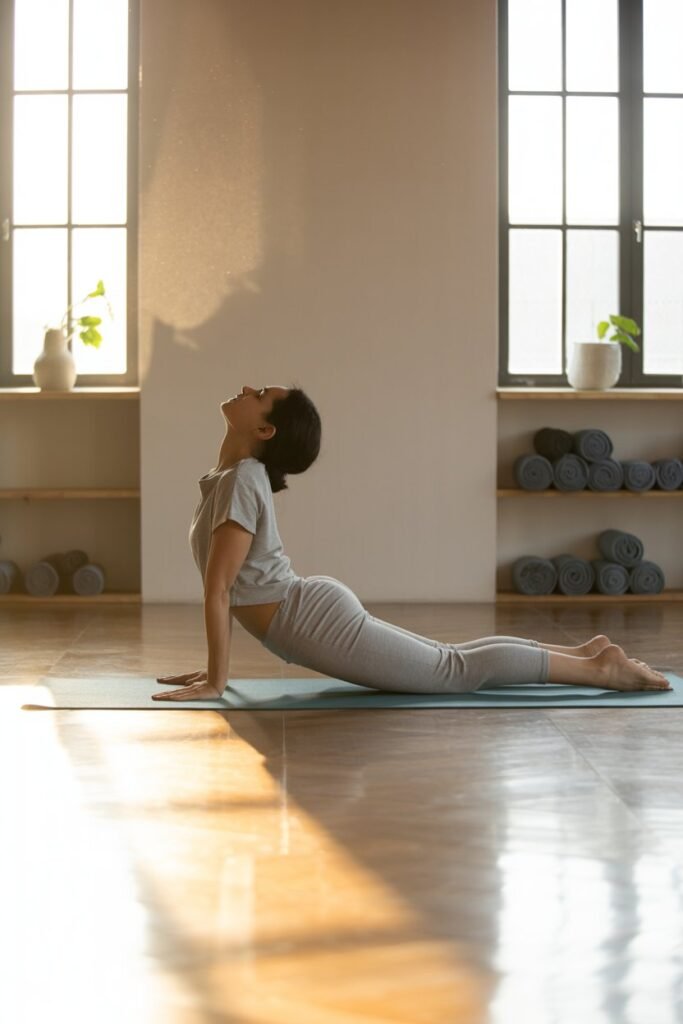
This is usually the point in the routine where my body finally starts to feel fully awake.
If you spend a lot of time sitting, looking at screens, or waking up with tight shoulders, this pose feels especially good.
It’s gentle, but it opens up your entire upper body in a way that instantly makes you feel less stiff.
Why It Helps
- Improves spinal mobility
- Opens tight shoulders and chest
- Helps improve posture
- Releases upper-body tension
How to Do It
Lie on your stomach with your hands underneath your shoulders.
Slowly press into your hands and lift your chest gently off the floor.
Keep your elbows slightly bent and avoid forcing yourself too high.
The goal is length, not how far you lift.
Take slow breaths and relax your shoulders away from your ears.
7. Supine Twist
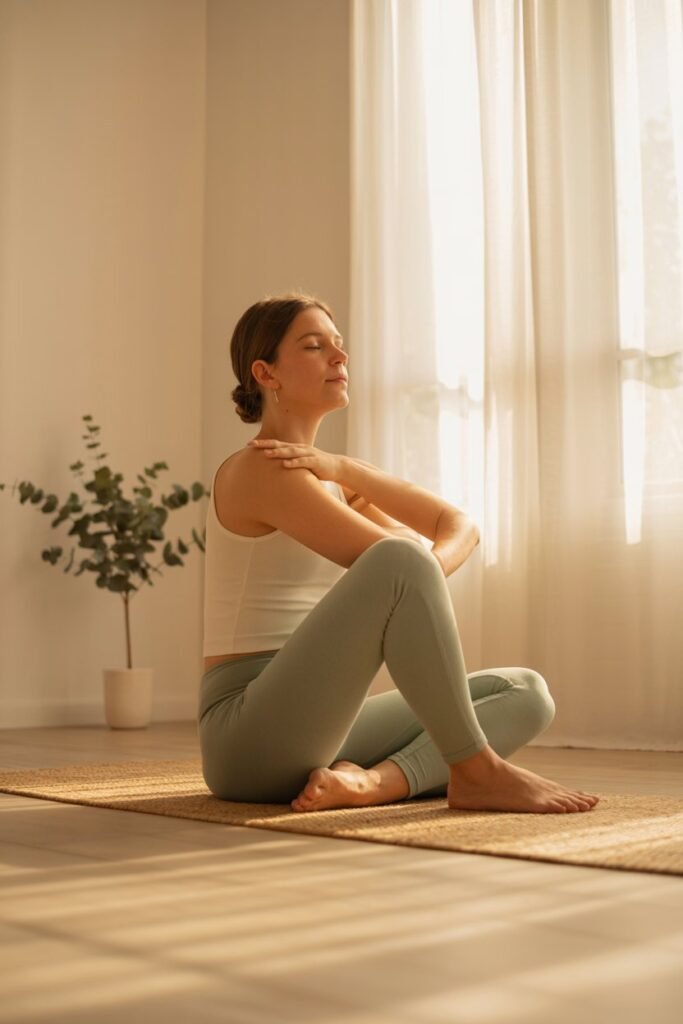
This is one of my favorite stretches in the entire flow.
It’s calming, relaxing, and feels amazing on mornings when your lower back feels tight.
I also notice this pose helps me mentally slow down instead of jumping straight into stress mode.
Why It Helps
- Releases lower back tension
- Improves spinal mobility
- Gently stretches the hips
- Helps your body relax deeply
How to Do It
Lie flat on your back and pull one knee toward your chest.
Slowly guide it across your body while keeping your shoulders grounded.
Extend your opposite arm outward and turn your head gently in the opposite direction if comfortable.
Hold for a few slow breaths before switching sides.
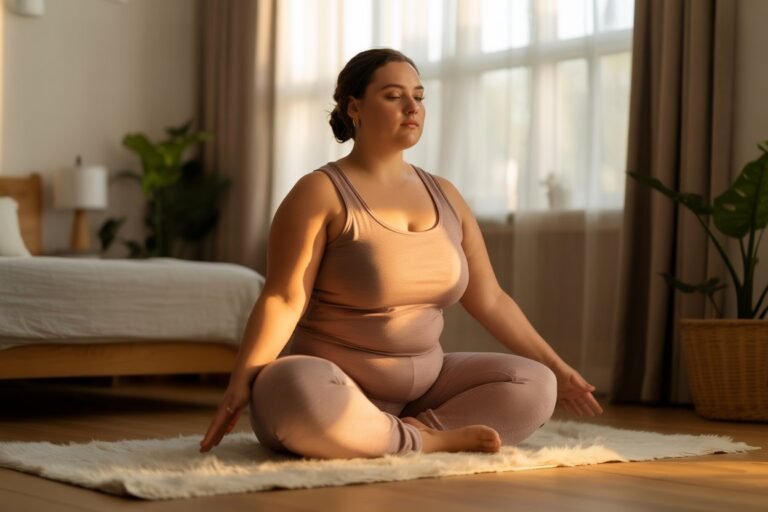
8. Easy Seated Breathing
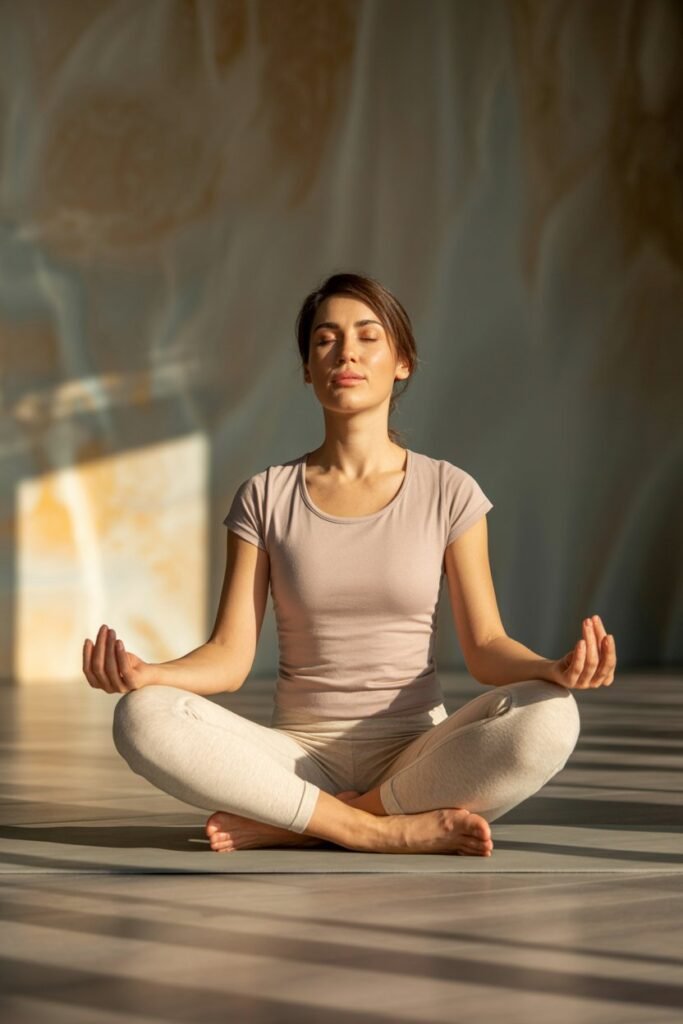
This might look like the simplest part of the routine, but honestly, it’s one of the most important.
Before I started doing this, I didn’t realize how tense I felt first thing in the morning.
Taking even one or two quiet minutes to breathe slowly changes the entire mood of the day.
Why It Helps
- Helps calm your nervous system
- Reduces morning stress
- Makes you feel more grounded
- Helps your body fully relax after stretching
How to Do It
Sit comfortably with your back straight.
Rest your hands on your knees or lap.
Close your eyes if that feels comfortable.
Take slow deep breaths in through your nose and out through your mouth.
Don’t overthink it.
Just breathe slowly and let your body settle.
How I Actually Use This Morning Flow
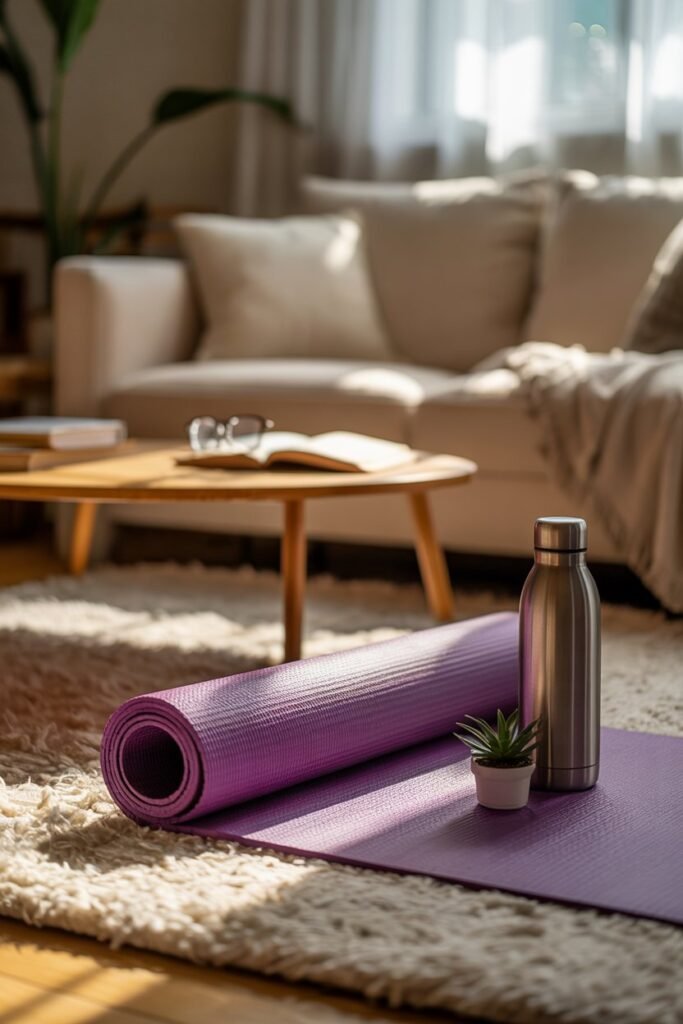
One thing that helped me stay consistent was stopping the “all or nothing” mindset.
I used to think I needed a perfect routine every morning or it didn’t count.
But honestly, even a short version still helps.
Some mornings I do the full flow slowly and take my time.
Other mornings I just do a few stretches before starting my day.
And I’ve noticed that consistency matters way more than doing everything perfectly.
That’s what actually helped my mobility improve.
What Helped My Mobility Improve Faster
The biggest thing was learning to stop forcing stretches.
At first, I thought mobility meant pushing my body as far as possible.
But that usually just made me feel tighter afterward.
What actually worked was:
- Moving slowly
- Breathing properly
- Staying consistent
- Letting my body loosen naturally over time
Once I stopped rushing, everything started feeling better.
Common Mistakes to Avoid
One mistake I made early on was trying to move too quickly through the poses.
I treated yoga like a workout instead of mobility work.
Another mistake was stretching too aggressively first thing in the morning when my body was still tight.
Now I focus more on gentle movement and controlled breathing.
That’s when this routine started helping the most.
Why This Routine Works So Well
This flow works because it targets the areas where most people carry stiffness:
- Hips
- Lower back
- Hamstrings
- Shoulders
- Spine
And instead of shocking your body awake, it helps you ease into movement naturally.
That’s why you finish feeling better instead of exhausted.
Expert Tips
If your body feels especially stiff in the morning, don’t try to force deeper stretches right away.
Give your muscles time to warm up first.
I’ve also noticed that slow breathing makes a huge difference during mobility work because it helps your body relax into the movements naturally.
And if you stay consistent with even a short routine like this, you’ll usually notice improvement much faster than doing intense stretching once in a while.
FAQ: Morning Yoga for Mobility
How long should this flow take?
Usually around 10 to 15 minutes, depending on how slowly you move through each pose.
Is this routine beginner-friendly?
Yes. The movements are simple, gentle, and easy to modify if needed.
Can I do this every morning?
Absolutely. This routine is designed for daily movement and gentle mobility work.
What if I’m naturally not flexible?
That’s completely okay. Flexibility improves gradually with consistency, not overnight.
Final Thoughts
This routine completely changed how my mornings feel.
Instead of waking up stiff and immediately feeling uncomfortable, my body now feels more awake, loose, and relaxed before the day even starts.
And the best part is, it doesn’t take a lot of time.
Just a few intentional minutes of movement can make a surprisingly big difference in how your body feels throughout the day.
Start slowly.
Stay consistent.
And let your mobility improve naturally over time.